
Roanoke City Directory Collections
The Virginia Room is the central local shelf for city directories. Its house-history material describes Roanoke City Directories from 1888 to the present, with gaps that should be checked year by year. Salem directories begin in 1923, but Salem and Roanoke County are not interchangeable with the independent City of Roanoke. The same collection supplies phone books, maps, newspapers, and indexes that can test a directory entry against another source.
| Collection | Years | Where Held | Access |
|---|---|---|---|
| Roanoke City Directories | 1888-present, with gaps | Virginia Room | Non-circulating, in-room |
| Salem city directories | Begins 1923 | Virginia Room | In-room, verify locality |
| Hill Directory Co. runs | 1935, 1940, 1945, 1950, 1955, 1960, 1965, 1970 | Virginia Room local-history holdings | Verify volume on visit |
| Roanoke-Salem telephone books | 1916-2008 | Virginia Room | In-room |
| Sanborn fire-insurance maps | 1898, 1903, 1907, 1919, 1955 | Virginia Room and Digital Sanborn via Salem | In-room or licensed access |
| Roanoke Times microfilm | 1869-present | Virginia Room | Reader access |
| NewsBank Roanoke Times | 1990-current | Library database | Remote with Roanoke Valley card |
| Obituary indexes | 1923-65, segmented with gaps | Virginia Room digital collection | Browse index scans |
“Present” does not mean every annual volume is on hand or every person was listed. The guide and journal material differ slightly on the first Roanoke year, so the conservative 1888-present wording is the sound choice. Ask for the exact year and edition before treating an absence as evidence.
Roanoke Directory Publishers
Publisher names help identify what kind of book is in hand. Virginia Room material records Sholes' Directory of the City of Roanoke and verified Hill Directory Co. Roanoke, Salem, and Vinton volumes for the selected years in the table. Chesapeake & Potomac Telephone Company of Virginia Roanoke-Salem books are specifically verified for 1950, 1955, 1960, and 1962. The wider 1916-2008 phone-book range remains useful, but it is not proof that every year or publisher is represented.
A city directory is stronger when its title page travels with the transcription. Capture the title, publisher, publication year, page number, and the exact heading above the entry. That note prevents a name from being detached from the locality, edition, and context that give it meaning.
Start with the Roanoke Historical Society collections when a directory reference needs neighborhood, organization, or photograph context.
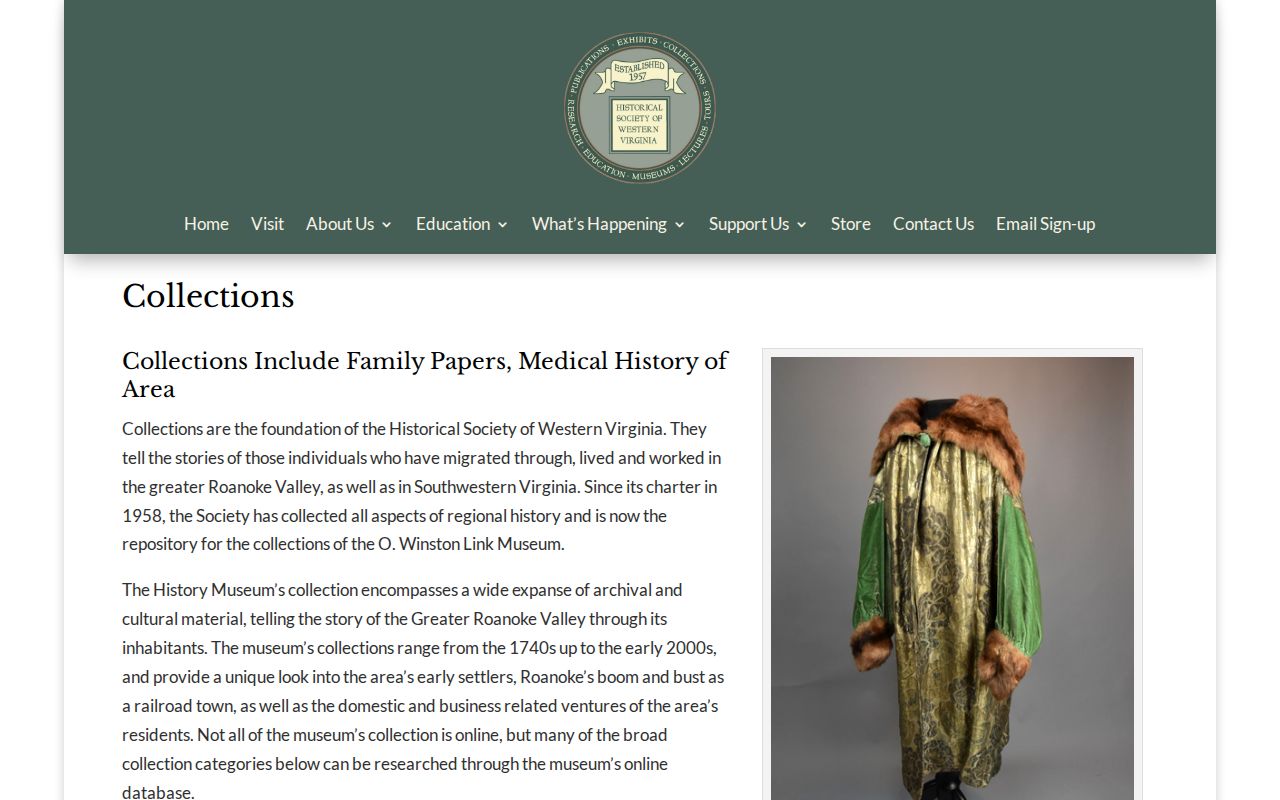
The Historical Society describes itself as a regional-history repository with material available for research, making it a companion archive rather than a replacement for an original directory volume or a Clerk record.
Virginia Room City Directory Access
The Virginia Room is at 706 S Jefferson Street, Roanoke, Virginia 24016. Its local-history and genealogy materials do not circulate. The published schedule is closed Sunday and Monday; Tuesday and Thursday 10 a.m.-8 p.m.; Wednesday 10 a.m.-6 p.m.; and Friday and Saturday 10 a.m.-5 p.m. Call before a long research trip, particularly when a microfilm reader or a specific directory year matters.
Bring the full name or complete address, including NE, NW, SE, or SW, and the likely year. The room permits cameras, though copying is item-dependent. Black-and-white copies are listed at $0.10, color or oversized copies at $1, and microfilm or computer prints at $0.20 per page. A notebook entry should preserve the volume title before any names are compared across years.
See the Virginia Room collection access page before visiting.

The Virginia Room connects the directory shelves with genealogy databases, local newspapers, photographs, obituary files, and other materials that help test a single printed listing.
Reading a Roanoke City Directory
A directory line may identify a head of household, street address, occupation, employer, spouse in parentheses, and a cross-reference. Some historical runs add widow or widower notation, initials, owner or renter indicators, or terms that reflect the publication practices of their time. Read those marks as historical source language. Do not silently modernize them, and do not assign a meaning to an abbreviation until the key in that volume confirms it.
| Name | Usually a listed adult or head of household, not necessarily every person at the address. |
|---|---|
| Address | Street location or a cross-reference, recorded with its full quadrant where shown. |
| Occupation | A contemporaneous work description, sometimes with an employer. |
| Spouse or widow notation | A relationship clue that should be checked in the cited edition and year. |
| Owner or renter mark | A publication-specific indicator, not a deed or conclusive ownership record. |
- Criss-cross section
- The address-order part of a directory, where a street and number can lead back to a listed name.
- Householder index
- A name-focused list of principal listings, which may omit boarders, children, or other household members.
- Abbreviation key
- The volume's explanation of shortened words and symbols, often near the front, that should be copied with the entry.
Note: An annual directory is a publication snapshot, not legal proof of title or a complete household census.
Roanoke City Directory Address Searches
When the house is known first, locate the reverse or criss-cross section and search the exact street number, street name, and quadrant. Record every nearby entry, then move to the name section for the listed person. That second pass can reveal an employer, spouse, alternate address, or “removed to” clue. Repeated numbered streets make a missing quadrant especially dangerous in Roanoke.
The 1907 city plan describes north-south streets, east-west avenues, and NE, NW, SE, and SW quarters divided by Jefferson Street and the Norfolk & Western railway. Preserve the suffix rather than guessing. No verified citywide renumbering date was found, so a suspected address change should be bridged with the legal description, plat, parcel, cross street, and year.
A directory address can identify an occupant while land records identify an owner. For the backward property trail, use the previous residents search to pair a directory finding with recorded deeds.
Roanoke City Directories and Census
Directories fill the years between federal census schedules, but the two sources answer different questions. A census records a household on one census date. A directory may appear annually and often highlights a head, subscriber, boarder, or other named adult. Federal schedules available through the ordinary 72-year release rule currently run through 1950, so later census records cannot be used as public confirmation.
- Find the first plausible name or address in a dated Roanoke directory and preserve the page citation.
- Follow that person through nearby directory years, noting moves, spouse wording, and changes in the name form.
- Use the criss-cross section to compare the address with other listed names on the same block.
- Match the closest directory year to the relevant census year, then compare the address and household relationships.
- When a name disappears, test a move, death, spelling change, omission, or publication convention before drawing a conclusion.
City directories are especially helpful for people who never appear as landowners. Deeds can show an owner living elsewhere, while the directory can preserve the local occupant. Keep the owner and occupant labels separate in the research notes.
Roanoke Obituaries and Newspapers
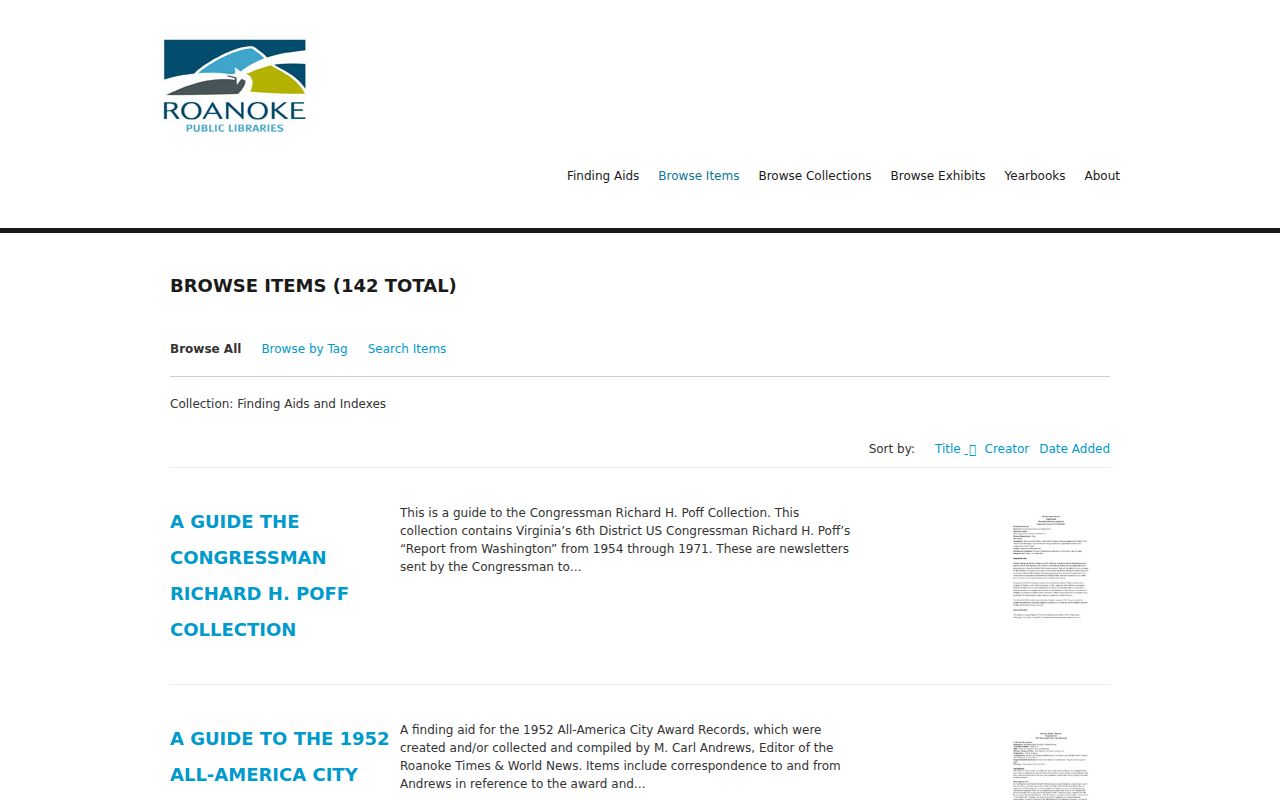
The Virginia Room's digital holdings include a Roanoke Times Obituary Index for 1923-50, a 1951-54 segment with stated gaps, 1955-59, and 1960-65, plus limited Roanoke Daily News material from 1890. Those segments are a finding tool, not the newspaper page itself. A missing entry can mean the wrong time slice was checked.
Use the Virginia Room digital collection to browse the relevant index material.
For the full paper trail, Roanoke Times microfilm reaches from 1869 to the present, while NewsBank supplies full text from 1990 to the current period for users with a Roanoke Valley card. The two tools work best together: one for historic page context, the other for modern name searching.
Black Roanoke Directory Research
Directory research needs context because historic editions did not represent every community evenly. Virginia Room material notes Arleen F. Ollie's compilation of roughly 6,000 names from Roanoke directories dated 1888, 1890, 1895, and 1910, with occupations and locations. It is a valuable finding aid for Black Roanoke history, but it does not replace reading the underlying volume and page.
Historic entries can include racial labels and ownership marks that are now obsolete and potentially misleading outside their original context. Quote or transcribe only what matters to the evidence, retain the original volume citation, and compare entries with newspapers, census schedules, cemetery records, or archival material rather than treating a directory label as a full account of a person or family.
Roanoke Archives Beyond Directories
When a directory trail stops, the Library of Virginia's Roanoke city local-record listing identifies deeds, court books, marriages, and other microfilm by record group. Examples include Hustings Chancery order books from 1884-1900 and deed volumes from 1887-88. Originals may remain with a local custodian, and microfilm or interlibrary-loan availability varies, so use the listed reel or volume as a request detail.
The Virginia Room also holds WPA manuscripts from 1936-42, cemetery and interment material, photographs, and licensed research databases. The Roanoke Historical Society can add regional and neighborhood context. Together, these sources preserve a much richer local record than a name line alone, while still requiring a source citation for every claim.